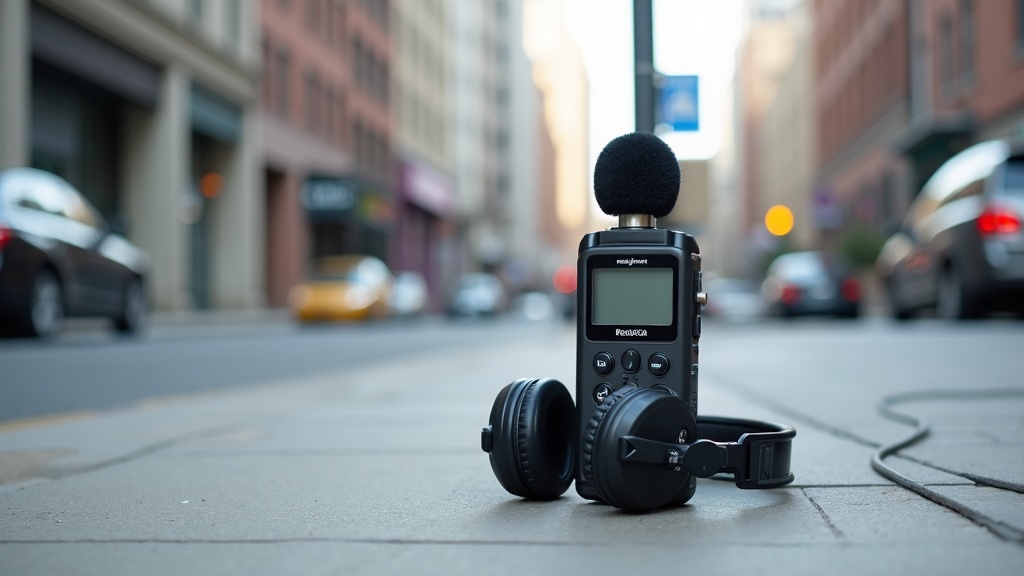
 Field recordingsare a great way add unique textures and personality to your beats. When you use sounds taken from real life, such as rain hitting concrete, birds outside your window, or even a busy train station, you bring a whole new dimension to your music. Recording your own samples lets you build sounds nobody else is using, and that really helps your tracks stand out from the crowd.
On top of that, capturing sounds from your surroundings is a fun way to turn your daily environment into a creative musical playground. Even if you just want to spice up a simple drum loop, field recording can provide lots of inspiration for your beats.
Why Use Field Recordings in Your Beats?
Field recordings offer something fresh and unexpected for your music. You’re not just pulling the same old 808 kick or hi-hat found in countless sample packs; instead, you’re shaping your own sonic identity. Adding things like the wind blowing, traffic noise outside your window, or the squeak of a creaky door can totally mix up your vibe can totally mix up the vibe of your beat.
- Originality: Sounds you record yourself haven’t been used in hundreds of other tracks.
- Texture: Field recordings often have natural movement and character that’s hard to create with synths or other instruments.
- Atmosphere: Realworld sounds help your beats feel alive and immersive.
- Storytelling: Using locationbased sounds can set a distinct scene or mood for your track.
Getting creative with field recordings can really transform your workflow and bring new approaches into your music-making process. Sometimes, one well-placed sound can completely change the direction of your track or inspire a whole new idea.
What Are Field Recordings?
Field recordings are simply any audio you capture outside a controlled studio environment. This includes anything picked up in the open: people chatting in a café, water running in a creek, or your dog barking in your backyard. If it’s caught out in the real world, it counts as a field recording.
They’re often used in sound design for movies and games, but music producers are using field audio more and more in beatmaking. These sounds can be kept raw for ambient textures or processed a lot to become the highlight of your beat, turning ordinary noise into new instruments.
Best Places to Capture Sounds
Honestly, just about anywhere you go can turn into a goldmine for unique sounds. Here’s a list of places you might want to check out:
- Nature spots: Forests offer bird calls and the sound of leaves, beaches give you waves and gusts of wind, parks come with crickets or distant conversations drifting by—there’s no shortage of material.
- Urban life: City streets, bus stations, subways, or markets are perfect for capturing crowd noise, mechanical rhythms, or cars passing by. Urban areas are packed with sonic inspiration.
- At home: Kitchens full of glasses clinking, drawers slamming for cool percussive hits, running water, creaky door hinges, or footsteps on different floors. Your own place might surprise you with how many sounds are hidden in plain sight.
Even a few seconds of something interesting can add an extra touch of depth or movement to your next production. Always be ready to stumble upon an inspiring moment.
The Gear You Need to Start Field Recording
Getting started doesn’t mean you need to spend a lot. The phone in your pocket is a fantastic starting point since it’s always with you, quick to pull out, and easy to use. If field recording grabs your creativity, you can upgrade your setup to get even better quality.
- Phone: Super convenient, and you get surprisingly good quality with most recent models—especially if you use a solid recording app or something like Koala Sampler.
- Portable recorder: Compact recorders like the Zoom H2, H5, or Tascam DR40 give you higher audio quality, more control, and often dual microphones for a natural stereo effect.
- Microphones: Shotgun mics are perfect for recording at a distance, while a pair of smalldiaphragm condenser mics can capture detailed stereo images and rich ambient soundscapes.
- Accessories: Windscreens—sometimes called “dead cats”—help keep wind noise at bay outdoors, while closedback headphones let you monitor and tweak your levels on the spot to make sure nothing gets missed.
If you’re just starting, experiment with basic gear; as you get more comfortable, adding an external mic or recorder can take your sounds up a notch.
How to Make Great Recordings
- Scout your environment: Take a minute to listen for cool, unique, or naturally rhythmic sounds before you hit record.
- Keep your recorder steady: Try to minimize extra handling noise, or better yet, rest it on a stable surface for a cleaner recording.
- Monitor your levels: Watch out for peaking—leave enough headroom, so loud sounds don’t distort or clip unexpectedly.
- Record longer than you think: Let the recorder roll; you can always trim out the best portions later.
- Use headphones: Closed-back headphones are your best friend for hearing exactly what you’re capturing, helping you catch problems right away.
Details like wind, shuffling feet, conversations, or distant traffic can sneak into your recordings, so being mindful about your setup pays off.
Processing Your Field Recordings
Once you’ve captured some interesting sounds, now comes the fun part where you shape them to fit your music. Here are a few processing techniques to try:
- Slicing: Cut your recordings up and shuffle the pieces to create unpredictable loops and patterns.
- Pitch shifting: Raising or lowering the pitch opens up new melodic or percussive possibilities.
- EQ and filtering: Narrow down to certain frequency ranges or chop out unwanted tones to polish your samples.
- Compression and gating: Tame dynamics, thicken weak recordings, or cut out background noise that sneaks in.
- Distortion: Crank it up for gritty, saturated, or completely transformed sounds.
- Time stretching: Drag out an ambient texture for lush backgrounds, or squeeze a sample for tight percussion.
- Layering: Combine your field recordings with drum hits, synths, or stack them for complex new sounds.
- Reverb and delay: Recordings placed in big virtual spaces or echoed out make dramatic changes to the vibe.
- Modulation: Effects like chorus, flanger, or phaser give life and depth.
- Autopan: Pan samples left and right to keep the stereo field interesting.
- Sidechain compression: Give your drums space and let ambient elements breathe around them in the mix.
- Reverse: Play samples backward for transitions, risers, or just to surprise the listener.
Try automating your processing in the DAW, making effects and filters change as the track progresses for evolving, ear-catching moments. The possibilities are endless with just a bit of experimentation.
Making Field Recordings Fit Into Your Beats
The awesome thing about field recordings is how flexible and adaptable they are. Whether you use them raw or heavily processed, they can fill just about any role in your music.
- Percussion: Cut up everyday noises like footsteps or dropped keys to layer with your snares or hi-hats.
- Pads and drones: Stretch out field audio and filter it for atmospheric backgrounds that fill out the spectrum beneath your melodies.
- Sampler instruments: Drop your custom sounds into your favorite sampler instruments and play them across your keyboard or pads.
- Ambience: Softly layer running water, wind, or birds as subtle, almost hidden ambiance. These details might not be obvious at first, but they make your songs more immersive.
- Transitions: Use the sound of passing traffic or a closing door, flipped or processed, to signal changes between sections.
Don’t be afraid to experiment—sometimes the strangest field recording ends up being the highlight or signature of your entire track. Trust your ear and keep trying new things.
Common Questions & Tips
What if my recordings are noisy?
Try using noise reduction plugins, EQ, or just lean into the lo-fi charm. Sometimes the “flaws” actually give your beat unique character and mood.
Do I need expensive gear to start?
Not at all! Your smartphone or budget recorder works perfectly to begin with. Only upgrade when you feel like you want more options or a pro sound.
How do I track down cool sounds around me?
Stay present and keep an ear out. Listen for percussive sounds, interesting moments, or objects that catch your attention. The more you record, the more you’ll notice new possibilities—and the more your sound library will grow.
Taking Your Beats Further With Field Recordings
Tracking down and recording your own sounds makes your beats unique and helps you move beyond the same old sample packs everyone else uses. Keep your recording gear—or your phone—close by, keep experimenting with techniques, and you’ll constantly find new ideas and textures to keep your productions fresh and exciting.
Your Next Moves:
- Take your phone or portable recorder and record a bunch of different sounds from your surroundings—the street, your home, or your favorite spot in nature.
- Drag one of those recordings into your DAW. Try slicing, pitching, reversing, or adding some effects to twist it into something new.
- Use your custom-made sample in your next beat, whether as subtle atmosphere or as the main rhythm. Let your new audio help spark creativity.
Give it a shot and see what field recordings inspire in your next session! The more you try, the more you’ll build up a personal sound library and a style that’s all your own.
2 replies to "How To Use Field Recordings In Beats"
This is such a thorough and inspiring guide! I love how you broke down not only the creative benefits of using field recordings but also the practical tips for capturing and processing them. It’s exciting to think about turning everyday sounds into something truly unique for a track. I’m curious, when you experiment with urban sounds like traffic or café chatter, do you tend to use them more in raw form for texture, or do you heavily process them to create entirely new instruments?
Thanks so much for the kind words — really glad the guide resonated with you!
To answer your question: I actually use both approaches depending on the track, but I personally lean heavily toward processing. A lot of the fun for me comes from slicing those recordings up and turning them into percussive loops or rhythmic layers. It’s amazing how a bit of traffic noise or café ambience can morph into something that feels like a custom instrument once you start shaping it.
That said, I still like leaving certain elements more raw when I just need a bit of atmosphere or movement in the background. It’s all about what the track needs, but experimenting on both ends of the spectrum always leads to interesting results.