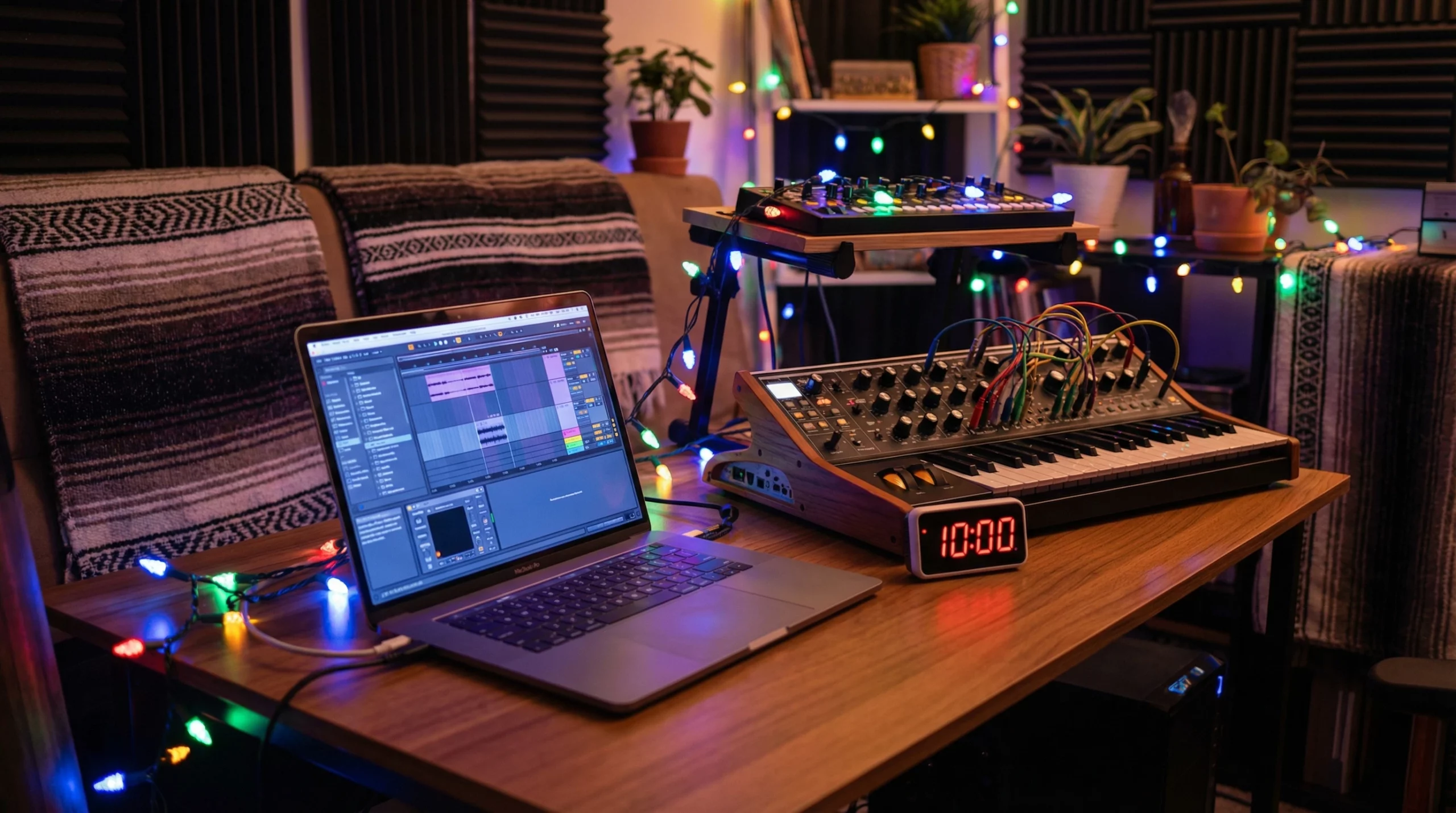
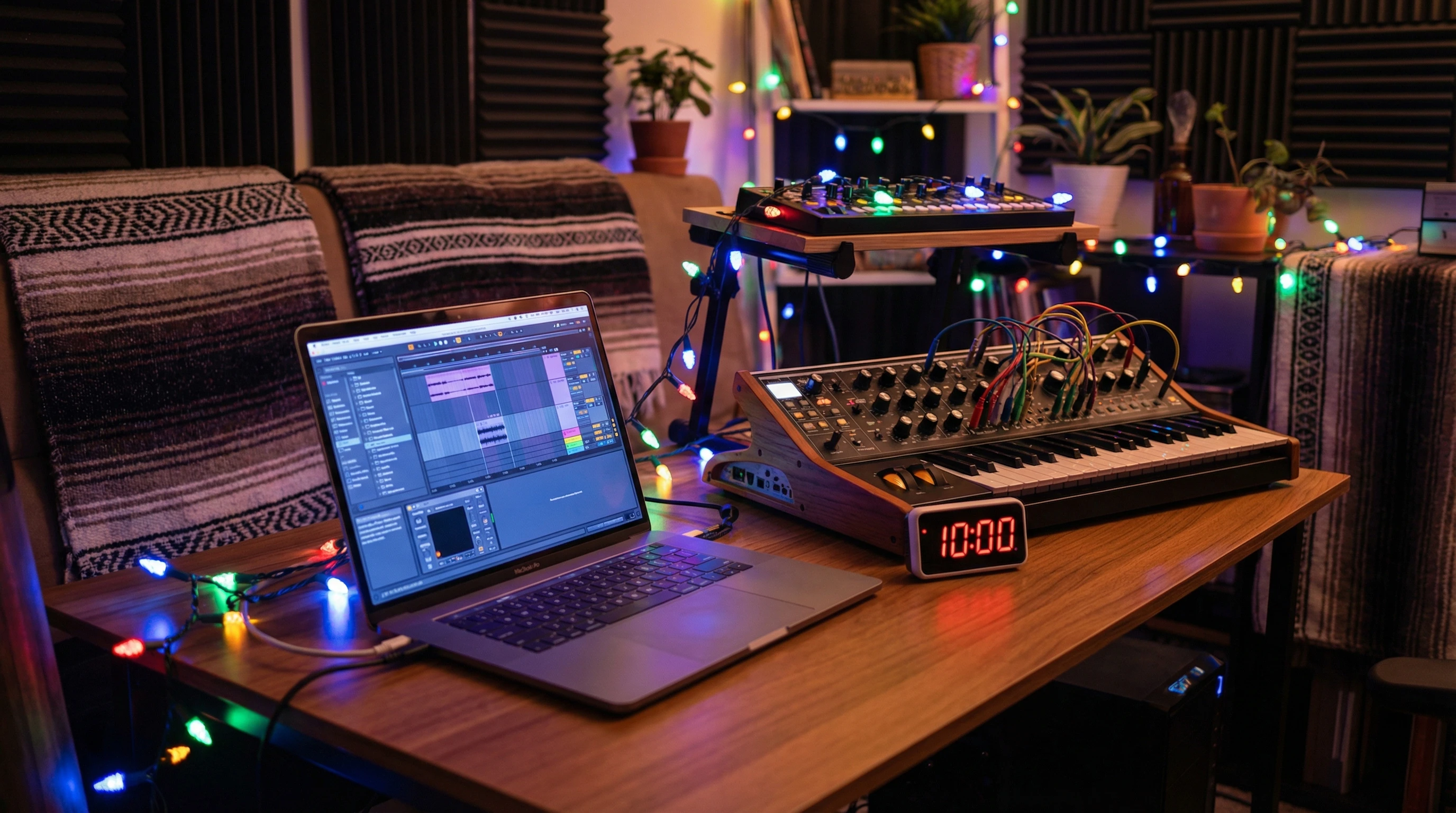
 Getting started on a new track shouldn’t feel like moving a mountain. Still, some days as a producer, I stare at my DAW for ages without laying down a single note. That’s where the “10-Minute Rule” saves my creativity. Instead of aiming to write the next big hit in one sitting, I just show up and make something. Anything for ten minutes a day.
Ten minutes may sound tiny, but it’s the little nudge I need to spark ideas, defeat procrastination, and actually build a real habit of finishing more music. This one rule switched up the way I work, and it might do the same for you. If you’re feeling stuck or overwhelmed in the studio, giving this routine a fair shot could get you unstuck faster than you’d think.
What Is the 10-Minute Rule?
The 10-Minute Rule is super simple. I set a timer for ten minutes, and work on a music idea until it goes off. There’s no pressure to finish a full draft, mix, or even have a next-level cool idea. I just show up and get things moving.
The magic comes from momentum and letting my brain chill out. Telling myself I only need ten minutes takes away the weight of perfection and gets me started. And more often than not, I end up going far past the timer. Sometimes, those first few minutes are just the spark I need to launch into longer sessions without it feeling like a chore.
Why Ten Minutes?
- The commitment is low, so I’m not as likely to put it off.
- Even on a busy day, I can squeeze in ten quick minutes and not disrupt my schedule.
- Ten minutes is enough to start a loop, mess around with ideas, or set up a new project template for future use.
This tiny investment, repeated daily, adds up. The power comes from consistency, not blowing yourself out with hours-long sessions. Creating regularly, even a little at a time, builds momentum you can really feel.
Why Producers Get Stuck Starting Tracks
Producer’s block happens for a bunch of reasons: pressure to be original, staring at too many empty tracks, not knowing where to begin, or just feeling overwhelmed by all the tools and samples. I’ve been there. More time doesn’t magically cure it, but taking action does.
Common Mental Blocks:
- “I need inspiration to start.” (Spoiler: inspiration usually comes while messing around, not waiting for a lightning bolt.)
- “I have to make something amazing every time.” (That kind of pressure is a creativity killer.)
- “I don’t want to waste time on something I’ll never finish.” (Practice is never wasted. Every minute working in your DAW pays off.)
The 10-Minute Rule quiets those excuses and gets ideas flowing again. Getting into the habit of starting, rather than aiming for perfection, helps your creative brain loosen up and find new directions more easily.
How to Use the 10-Minute Rule in Your Workflow
Making this part of your daily routine may take a little planning at first, but it’ll quickly become second nature. Here’s what you can do:
Your Step-by-Step Plan:
- Pick a consistent time to work, like right after morning coffee, before bed, or during a lunch break.
- Set a 10-minute timer. Use your phone, your DAW’s built-in tools, or a free online timer site.
- Open your DAW, load up a sound, and just start. Maybe it’s a drum groove, a chord stab, or flipping through samples until something clicks.
- No judgment whatsoever. If you make something weird, incomplete, or even downright off-putting, that’s totally fine. The goal is to show up and get making.
Usually, I find myself still going long after the timer rings. But if I don’t, it’s all good, too. I got my creative reps in for the day, and that’s what counts.
What to Create in Just Ten Minutes
Ten minutes won’t get you a finished masterpiece, but it’s perfect for building out a “sketchbook” of ideas you can revisit. Here are a few quick things you can focus on in a ten-minute sprint:
- Lay down a drum loop
- Try out a new synth patch or design a weird sound
- Hum or play a melody line on your keyboard
- Sample and chop up vocals or random field recordings
- Stack a few chords and see if you vibe with them
- Layer different instruments just to see what sticks
I keep a folder labeled “10min Sketches” just for these sessions. Some will never get finished, but a surprising number actually turn into real tracks later when I listen back and find something inspiring. Over time, it becomes a goldmine of half-baked gems just waiting for you to polish them further. It’ll help you see progress, even when a finished song feels far away.
Tips to Make the 10-Minute Rule Stick
Consistency makes this work. Here are a handful of tricks that help me stick to it, even when I’m short on time or a bit lazy:
- Put your gear somewhere easy to access. Don’t spend your ten minutes untangling cables or clearing desk space.
- Make a playlist of tracks that give you a boost, and listen to a song before your session for motivation.
- If you’re in a rut, use a random sound to break through the monotony and keep things fresh.
- Try starting a private group or online chat with producer friends for daily check-ins. A little accountability goes a long way toward making anything a habit.
- Be kind to yourself. There are no wasted sessions—only practice and new ideas stored for later. Remember, even failed attempts are steppingstones in your creative adventure.
Building habits always takes some time. If you miss a day, treat it like a speed bump, not a stop sign. The next session will be there waiting for you.
Answers to Common Questions
What if I only end up with bad ideas?
Honestly, that happens sometimes. But the more bad ideas I capture, the more likely I am to stumble onto something cool later. The “bad” ideas teach me what doesn’t work, and I can always recycle or remix parts of them if I’m stuck on a new track in the future.
Do I need to use ten minutes on the same track every day?
Nope, not at all. Some days I start something brand new, other times I keep working on a sketch from yesterday. There aren’t any rules except showing up and making music. The variety helps the process stay exciting instead of feeling like a grind.
How do I avoid distractions?
- Put your phone on airplane mode during your session.
- Close those extra browser tabs to help focus.
- Give yourself permission to focus completely for just ten minutes; tell yourself everything else can wait until you’re done.
Can beginners use this approach?
Absolutely. If anything, beginners get an even bigger boost from short, regular sessions. It eases the pressure, helps you learn your tools faster, and gives you a steady routine to lean on as you keep improving.
The Benefits of a QuickDailyCreation Habit
- Beats procrastination: It’s only ten minutes, so there’s less reason to put it off.
- Builds muscle memory: Just like practicing an instrument, making tracks often helps producing feel more natural.
- Keeps ideas fresh: You won’t get too attached or burned out. If one sketch flops, there’s always tomorrow to try again.
- Makes finishing easier: You end up with loads of ideas to revisit; no more staring at a blank project with no direction.
The best part: after a while, showing up for ten minutes won’t feel like a challenge. It just becomes as normal as your morning cup of coffee or a quick scroll through music forums. You’ll be able to create more music over time without feeling exhausted or overwhelmed.
Try It: Your Turn to Build the Habit
- Choose a time when you’re usually free and put a daily repeating alarm on your phone or computer.
- Create a new folder on your computer called “10min Sketches” or something similar for your quick ideas.
- Start today with just one ten-minute session. Don’t overthink it, just hit record and see what comes out. Have fun with the process.
- Repeat every day for a week. Watch your creative output pile up quickly, and check in with your progress at the end of the week.
If you want to get more music done, don’t wait for motivation. Take action right now by carving out ten minutes for creation. Trust me, starting is where the magic hides. The only way to make more tracks is to actually make more tracks. Remember, you don’t need more free time—you just need to get things started.