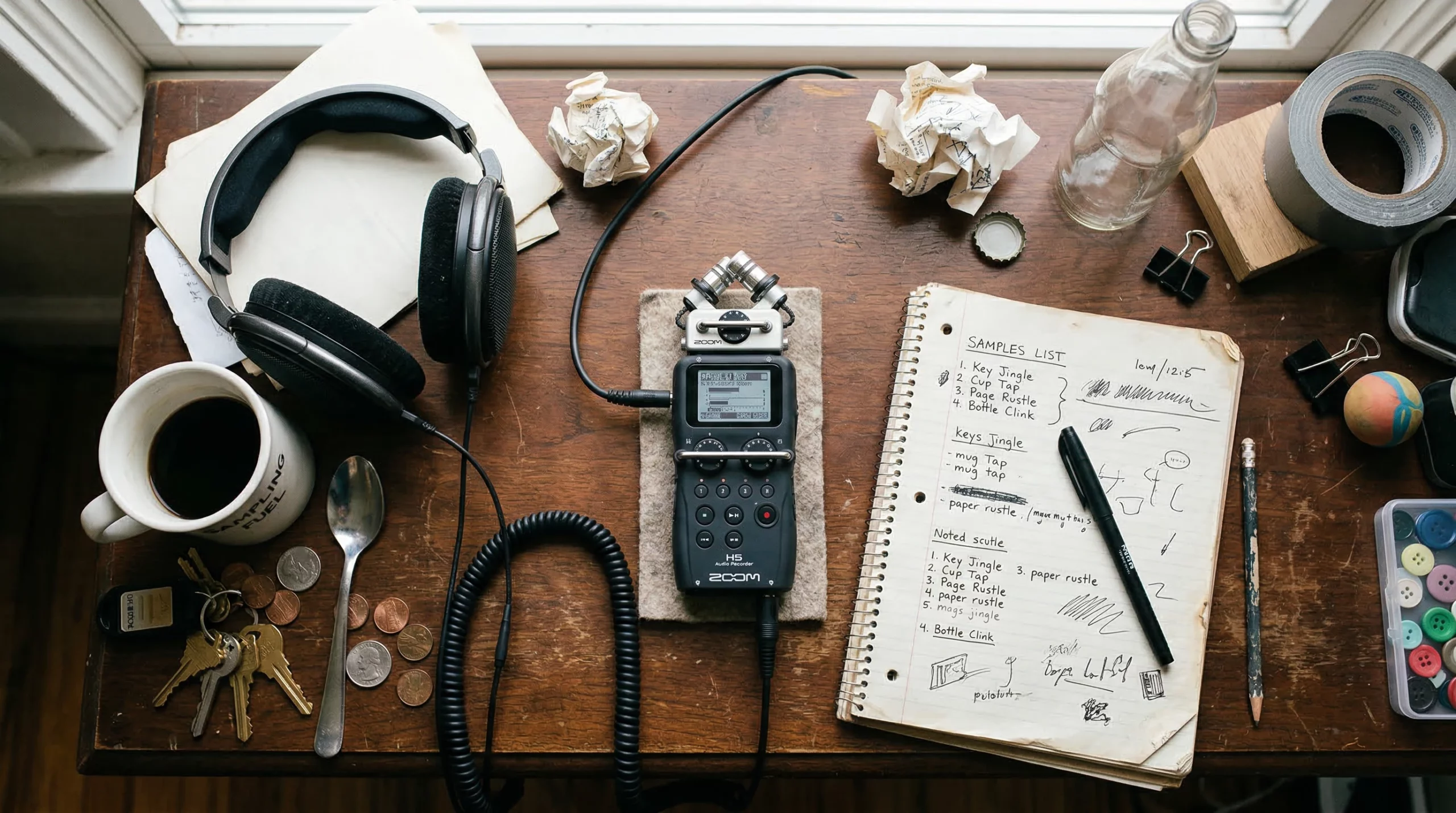
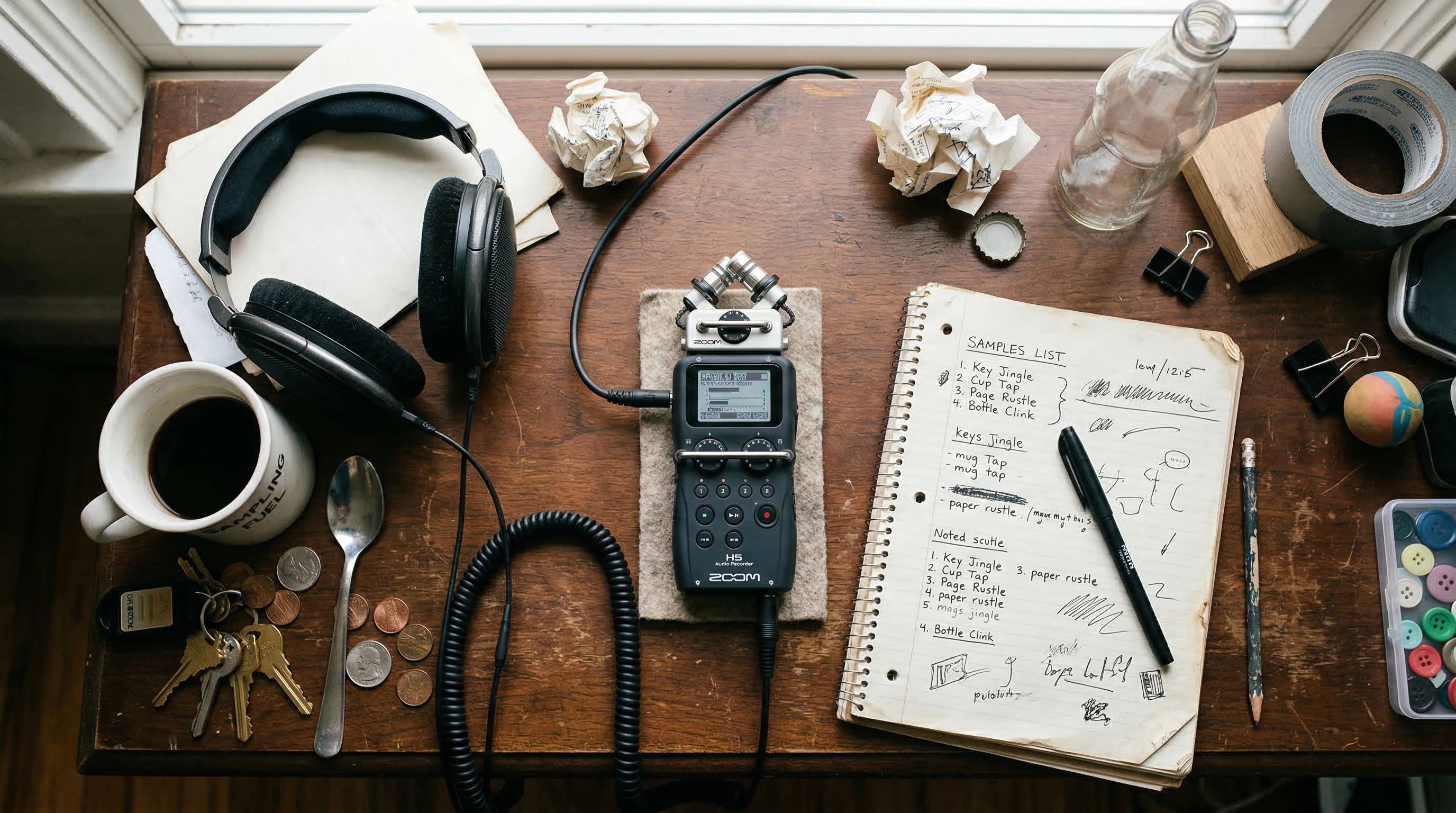
 Everyday objects are full of interesting sounds hiding in plain sight. If you’re like me, you tap your mug, snap your fingers, or hit a lampshade and wonder what it would sound like used in a beat. Sampling sounds from everyday objects gives your tracks a gritty, personal edge you’ll never get from a stock pack. All you need is your phone, a portable recorder, or any mic you can get your hands on—and plenty of curiosity.
Grab your headphones and a notepad. I’ll break down how you can start sampling the world around you for music and beatmaking. The process is easy, fun, and totally unpredictable. There are endless ways to flip a simple household noise into something wild, polished, or atmospheric. Let me show you my favorite techniques, the tools I rely on, and some creative tricks for making everyday sounds musical and interesting.
Getting Started With Field Recordings
Field recording is just capturing sounds outside the studio—like traffic, kitchen drawers, rain, or bicycle spokes. You can use a dedicated field recorder, but honestly, your phone’s voice memo app is a great starting point. What really matters is the sound itself and your ear for spotting something cool in the ordinary.
How Field Recordings Turn Into Texture
Layering snippets of life’s everyday soundtrack—footsteps, birds, the hum of your fridge—can give your tracks atmosphere. Throw one under a chord progression and what was flat suddenly has a sense of movement. It’s not just about dramatic effect; these textures make your music feel immersive and real.
- Record a city street and layer that under a lo-fi beat for instant travel vibes.
- Capture rain hitting your window for an ambient intro or a dreamy breakdown.
- Mic up a running tap, then chop and loop the water gurgle into a percussive groove.
If you want more inspiration, check my post on using field recordings in beats. It’s got practical ideas you’ll want to try out.
Turning Tiny Noises Into Massive Sounds
One of my favorite things about sampling sound is blowing up a tiny, quiet noise until it sounds huge. Think of it like macro photography, but for audio. You’d be surprised by what you get when you record the click of a pen, the tick of a clock, or even the crunch of paper up close to the mic.
Why Tiny Sounds Hit Different
- The fine details really pop once you crank up the gain or stretch a sample out.
- You find transients and subtle textures that would be missed by the human ear.
- Unexpected results give you creative options—perfect for drum layers or one-shot samples.
Simple Macrorecording Ideas
- Hold your mic tight to a zipper, record the sound, and edit it into a snappy snare layer.
- Crush some ice near the microphone, then pitch it down for a ghostly percussive hit.
- Squeeze bubble wrap and slow it way down for a glitchy effect or synth blip.
Push the volume, experiment with saturation, and get right up close. It might sound weird in the room, but in your DAW, those little noises become beatmaking gold.
Using Steady Noises as Musical Layers
Constant, droning, or repeating noises make excellent musical layers. A hairdryer, a heater’s hum, fan noise, or even the buzz from an old monitor work great as beds for synth pads, subtle atmospheres, or can be chopped into drum one-shots.
Adding Character With Ambient Layers
- Drag a roomtone hum underneath pads to give them instant warmth.
- Slice and gate a washing machine’s rumble—it can make surprisingly punchy percussion.
- Loop a whirring laptop fan, add a filter and reverb, and you’ll have a haunting drone for intros or transitions.
The trick is to blend these recordings in at low volume, just beneath the main layers, or process them until they’ve evolved into something entirely new. They bring personality to your productions in a way that nothing else can offer.
Experimenting With Effects: The Fun Part
This is when everything gets interesting. After you’ve sampled your sounds, it’s time to play scientist in your DAW. Tuning, chopping, filtering—these are the tools that transform random noises into usable musical elements.
Popular Effects and What You Can Do With Them
- Tune your sample until it fits your beat’s key. Lower pitches can become kicks and bass stabs, while higher pitches can produce glassy hats and bells.
- Chop it up. Slice a kitchen drawer slam into bits and make a brand new rhythm pattern.
- Filter to remove unwanted frequencies or zone in on what you want. Using a highpass on a droning fridge can leave you with just the shimmery top end.
- Reverb can put a tiny pen click in a huge space or make the crinkle of a wrapper sound like a warped synth.
- Try bitcrushing, stutter, delay, ring modulation, or granular stretch for some really unexpected and fun sounds.
If you stumble upon a cool result, but it’s not quite working in your beat, try stacking a few processed versions together. That’s how pros make kicks smack or hi-hats shimmer.
Best Tools For Sampling Everyday Objects
Gear doesn’t have to be fancy or expensive. Most of the time, I’m just using my phone or a simple handheld recorder. The most important thing is to use what you have and start recording.
Common Setups That Work
- Phone voice memo app: Super portable, always handy, and good enough for grabbing textures.
- Handheld field recorders: Like the Zoom H1n or Tascam DR05. Clear sound on a budget and fits in your pocket.
- USB Mics: Plug one into your laptop for higher quality at home or on the go. Even basic ones are great for collecting sounds.
- Any other mic: Plug a mic into your interface. This is great for really quiet noises where you might want more control.
Don’t stress out over technical specs. If it records, it works. All the fun is in discovering what you capture and how you flip it in your music. Just start.
Common Questions & RealWorld Hurdles
Isn’t background noise a problem?
Background noise might seem annoying, but it’s just another layer to play with. It can turn into part of your vibe. You can always edit, gate, or filter things later. Sometimes a distant conversation or a random horn gives your beat a sense of place it would never have otherwise.
How do I avoid boring or repetitive results?
- Don’t overthink the source. Throw some wild sounds into the mix and trust your ear.
- Switch up mic positions—changing the distance or angle completely switches up the sample.
- Mix together two or three unexpected recordings for something unique.
What if I only have a phone?
Your phone is more than enough to get going. No need for fancy mics. I still use everyday phone recordings in my beats for texture and vibe. Just keep your recordings organized and experiment with spaces, objects, and effects afterward.
Boosting Your Creativity Even Further
Sampling everyday objects can be as simple or as intricate as you want. The biggest challenge is getting stuck in perfection—let your process be a bit messy and surprising. Homemade sounds can breathe real life and identity into your tracks. You’ll have something that nobody else can copy, and it often takes your music in surprising directions that no sample pack will give you.
Go Make Some Noise
- Choose one object nearby and record it—no rules or pressure.
- Edit, chop, and experiment with every effect you want in your DAW.
- Layer your new homemade sample into a project and see where it leads.
Ready for a fresh creative jumpstart? Go check out your kitchen, hallway, or backyard and follow your curiosity. You might surprise yourself and add a flavor to your music that can’t be copied. So, what will you sample first?