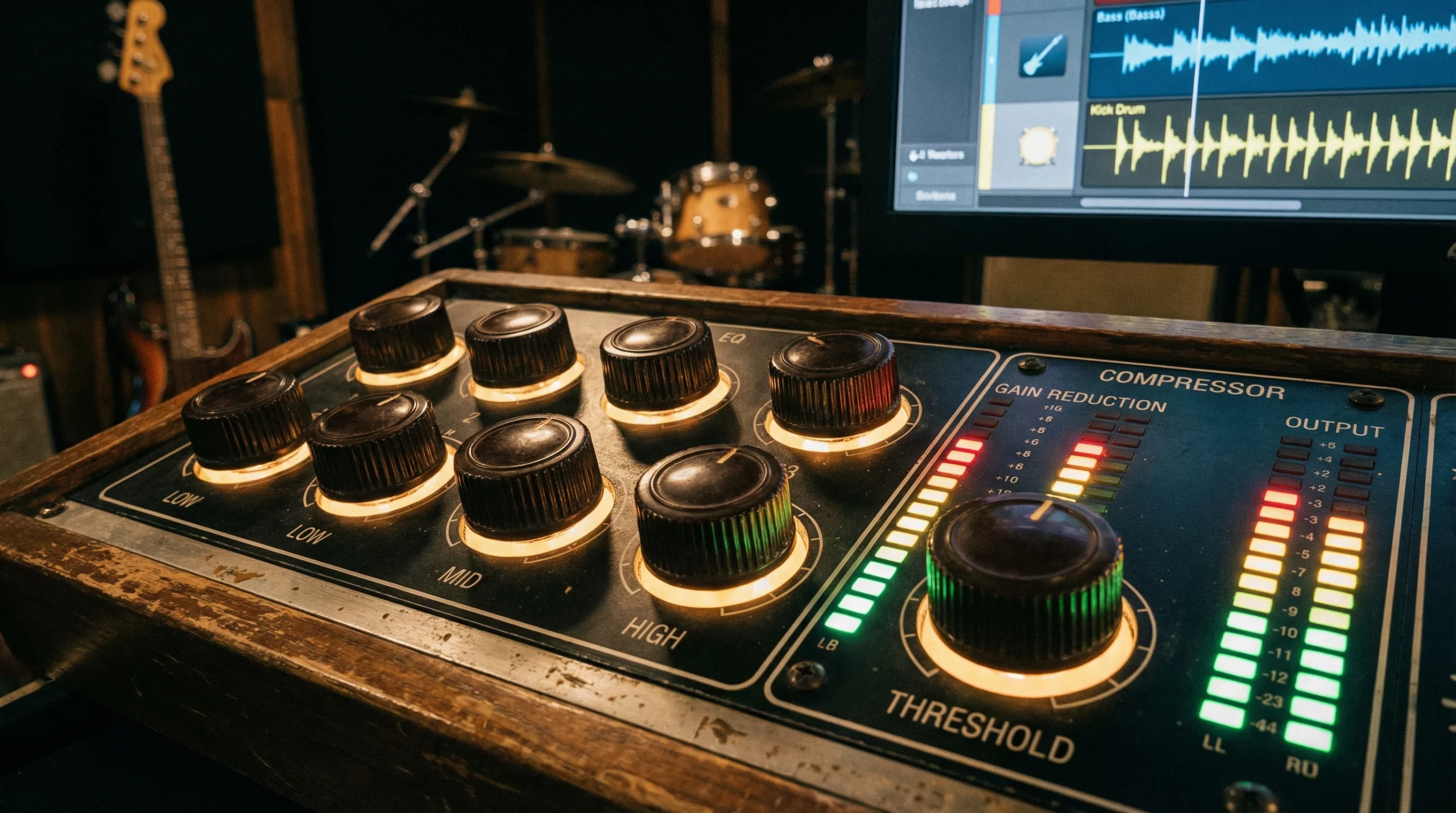
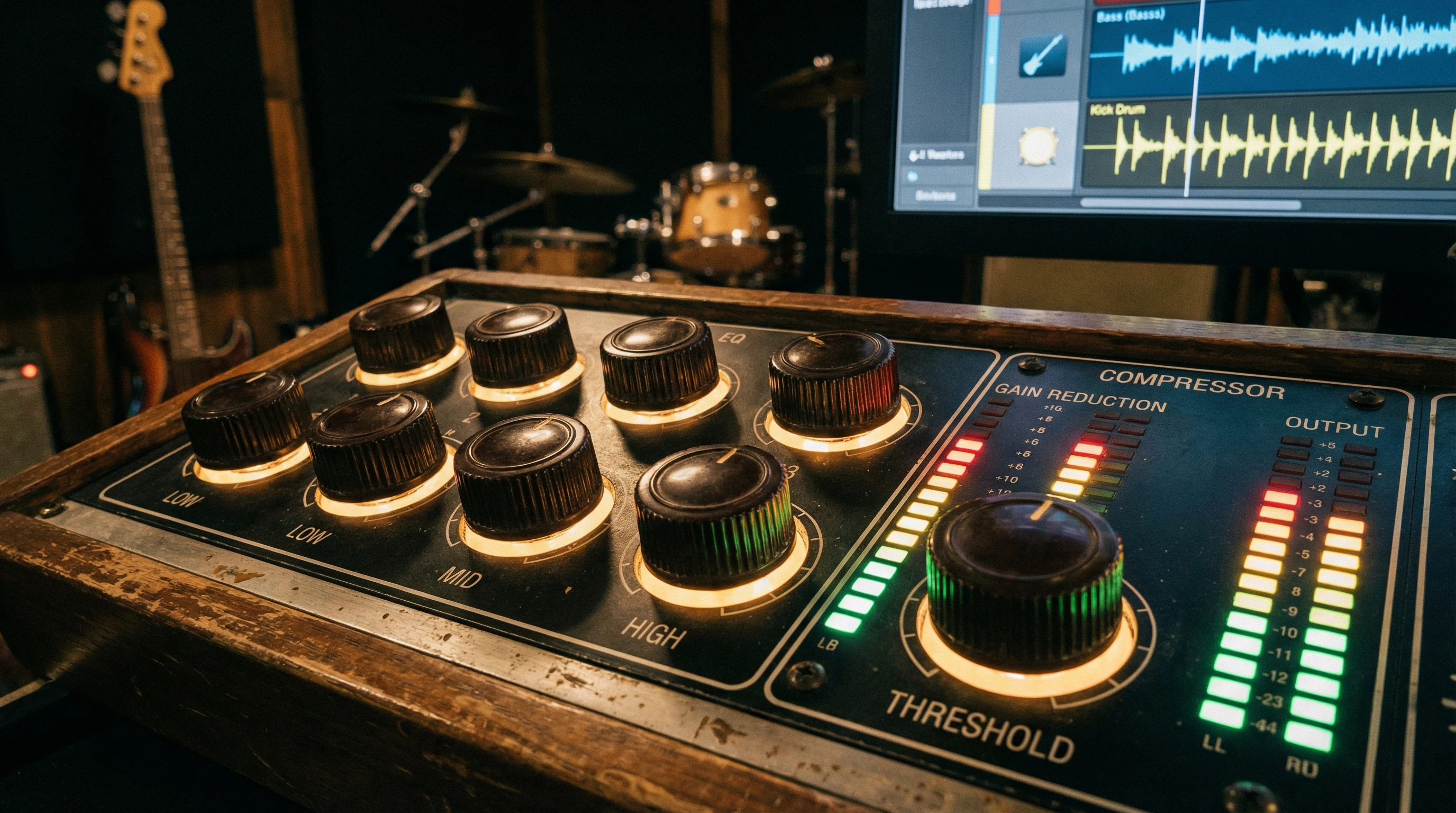
 Dialing in the kick drum and bass is the secret sauce of fat, punchy mixes. Whether you’re working on a tight house groove, a punchy hip hop beat, or a vibey indie track, if the low end is sloppy, the whole song falls apart. The good news? Mixing kick and bass isn’t about finding mysterious tricks. It’s about clear choices and a bit of careful listening. Here’s a practical guide to help you get that kick and bass playing nicely together without getting in the way of each other.
Every mix is different, but the low end game almost always comes down to these basics. If you nail these, you’re going to love how much more powerful and punchy your mixes sound.
Step 1: Choose Your Low End Boss
The first question you should always ask self is: Who owns the real sub lows? Sometimes it’s the kick, other times it’s the bass, and occasionally they trade off. It depends on the style and groove.
- EDM, Trap, Pop, Hip Hop: The bass is usually the sub king. Think heavy, deep, thumping 808s and synth basses. The kick sits above, adding punch and snap.
- Rock, Funk, Soul: In these genres there is no general rule. Often the kick handles the deep end, while the bass lives a bit higher up, leaving space below. Sometimes it’s the other way around.
Make this decision before touching EQ. If you keep switching later, you’ll probably end up chasing your tail. If you’re not sure, reference a commercial track in your style and listen for whether the kick or bass feels deeper and heavier. Try muting your kick, then the bass. Whichever one makes the mix fall apart in the subs is probably your main low end anchor.
Getting this decision sorted early makes every next step easier. It gives you a clear focus before you start dialing in tones and effects. If you skip this, it’s easy for the low end to get crowded and unclear, no matter how good your sounds are.
Step 2: Carve EQ Space
Now that you know who’s boss, it’s time to give each sound its own home in the spectrum. Time to reach for your favorite EQ.
How I Set EQ Pockets:
- Boost the low end anchor. Find the fundamental frequency of the kick or bass carrying the subs—usually somewhere between 50 and 80 Hz, for deep subs even lower. Add a gentle bass boost if it needs more weight.
- Create space for your anchor. On the other sound, dip out a few dB (typically 2 to 4 dB with a moderate Q) at that anchor frequency. This avoids the sounds stacking and adds clarity.
- Add mids for punch and presence. If the kick seems lost, add a little bump in the 2-4kHz range so you catch the beater or click. This brings definition without messing with the low end.
I also like to listen to both soloed and together, tweaking until both kick and bass have their own pocket without either overpowering the other. In some cases, if the sound is still muddy, I’ll use a gentle high pass filter on everything except the main low end anchor, rolling off unnecessary lows from synths, guitars, and even vocals. This lets the subs breathe and keeps the whole mix from being overloaded down low.
Step 3: Control the Groove with Compression
Lows get out of hand fast, and compression helps keep them in check. But going too far can make the kick or bass sound squashed, so the goal is to keep things musical and punchy.
How I Use Compression and Transient Shaping:
- Kick Drum: If the kick is erratic, add a compressor with a fast attack and medium release for consistency. Set the ratio low (about 2:1 or 3:1), and only pull as much as you need for tightness. If you’re using a kick sample, you probably won’t need a compressor, as most kick drum samples are already heavily compressed. Sometimes, a transient shaper helps punch up the front without flattening the thump.
- Bass: Use gentle compression—slow attack, faster release, and a lower ratio. This keeps notes even and present, letting the groove breathe. If the bass goes limp, I back off the compression a bit and listen to how it sits with drums. Adding a touch of drive or saturation brings the bass forward without losing punch.
Control over how the attack and sustain is shaped by compression or transient tools is crucial. Transients (the sharp front edge of a note) matter most for groove. If your kick and bass both hit with bold transients at the same time, it can get chaotic. Taming them creates headroom and makes every other part of the mix sound tighter by comparison.
Step 4: Use Sidechain for a Clean Hit
Sometimes, even with the EQ set, the kick drum gets lost when the bass note hits. When this happens, sidechain compression saves the day by quickly creating space for each sound.
What I Usually Do:
- Put a compressor on the bass track, triggered by the kick drum. The bass ducks slightly every time the kick lands, clearing the way for impact.
- Use subtle settings: just 1 to 3dB of gain reduction, with a fast attack and release. This lets the kick shine through, but keeps the transition smooth and natural. Unless you dig the “pumping” effect—that can be cool in House and EDM—then you can push it harder!
This quick trick cleans up the low end and gives the kick clarity, especially in busy mixes. Even if you don’t hear the sidechain “working,” if the final mix feels less cluttered, you’ve done it right.
Step 5: Check Phase and Alignment
Phase cancellation is a silent killer for punchy low end. Sometimes, the kick and bass sum together and feel huge; in other cases, they cancel each other and sound thin, even if your EQ settings are right.
Simple Phase Checks That Save Mixes:
- Flip the polarity (either using the phase button or the “Ø” switch) on the kick or bass track while both play. If the low end gets louder or more solid, you’ve dialed in a better phase relationship.
- Pay attention to the timing. If tracks are a few milliseconds off, nudge them slightly forward or backward on the timeline for better alignment. This is key when layering electronic drums or using multi-mic setups.
If your bass and kick feel like they’re pulling in opposite directions or get hollow together, phase is likely the reason. Small adjustments can transform the groove.
Step 6: Reference and Monitor with Purpose
After all this work, your mix can still play tricks on you if you don’t double-check. I always compare across several playback systems and reference tracks.
- Flip between headphones, studio monitors, and even your phone or laptop speakers to track down any weak or boomy spots. If the low end feels tight and the kick/bass live well together everywhere, your mix is in a good place.
- Reference against mixes you trust in your genre. You may be surprised—many great modern tracks (even in bass heavy genres) have less massive bass than you think, but it’s balanced and present.
Doing these regular checks helps prevent mix disasters early. With each track, you’ll get better at trusting your ears and tools, and you’ll notice your decisions get faster with practice.
Common Questions & Mix Problems
Why is my kick or bass always muddy?
Muddiness almost always comes from sounds fighting for space, or too much sub for your speakers to handle. Try gentle cuts in the 100 to 300Hz region and stick to one true sub anchor. If it’s still not working, mute different tracks until you pinpoint the issue.
How do I get more punch without being boomy?
- Try boosting higher harmonics on your bass or 808—somewhere between 700Hz and 1kHz. This helps it stand out without hogging the lows.
- Boosting around 2-4kHz on the kick lets the attack pop out without causing sub overload.
What if my kick and bass both sound good solo but clash together?
This almost always means they overlap in frequency, phase, or timing. Go back to your EQ dips, check sidechaining, and nudge the waveforms so their attacks don’t align perfectly. Always mix in context—soloing can be misleading.
Make Your Low End Work For You
Kick and bass build the foundation of a good mix—it’s what makes a song groove. With a locked-in low end, every part of your mix feels better. The next time you fire up a new project, make the kick and bass relationship your starting point. You might catch yourself replaying your own tracks just for that tight, punchy foundation!
Your Quick Action Plan:
- Pick your low end anchor (kick or bass) before you start EQing.
- Carve out EQ space so each sound shines in its own pocket.
- Add gentle compression and consider sidechain if things need space.
- Check phase and timing if your lows aren’t sitting right.
- Always reference on systems you know, and compare to tracks you trust.
Ready to take control of your mixes? Next time you drop a beat, tweak the low end with a purpose and listen to what changes. Low end clarity isn’t out of reach—it just takes smart, simple moves delivered with intention. Try these steps and watch your productions level up!
2 replies to "How To Mix Kick Drum And Bass"
It was interesting to read your approach of choosing a single “low end boss” right from the start. Makes all the following EQ and compression decisions much clearer.
For the sidechain compression trick, what is a good way to set the release time so the bass ducks just enough for the kick to punch through without creating an obvious pumping sound?
Making decisions as early as you can, definitely makes things easier down the line.
For the release time of your side chain compressor try the following: Set the release time to the shortest value, then increase until you start to hear the ducking. Back off until you don’t hear it anymore.
Hope that helps:-)